The Tide Will Hold You: A Quiet Guide to Drying Out a Classic Bilge Keeler

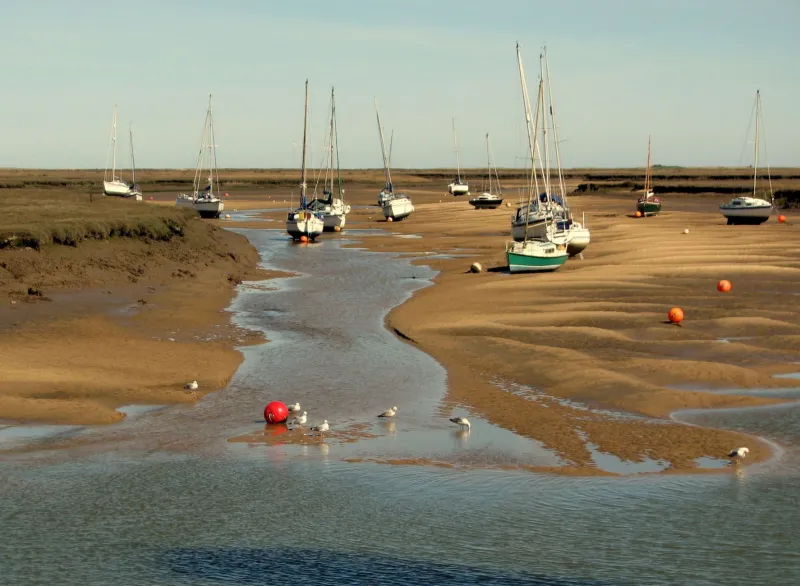
Photo: Alexpl, CC BY-SA 4.0, via Wikimedia Commons
There is a moment, somewhere between the last of the ebb and the first hint of the flood, when a bilge keeler stops being a boat afloat and becomes a small, quiet building on the sand. The creak of the keels settling, the slap of a halyard, the sudden absence of water against the hull: for anyone brought up on UK estuaries, it is a familiar and rather comforting sequence. Drying out deliberately is one of the small freedoms of twin-keel ownership. It is also a skill worth treating with respect.
First, ask whether your boat actually wants to sit
Not every bilge keeler is a natural beach dweller. Many traditional twin-keel designs were drawn for exactly this purpose — sitting upright on a drying mooring, taking the ground without drama. Others have keels that are better described as legs of convenience than proper beaching supports. Before you plan a night on the sand, check the builder's information, the class association and, if the history is murky, a surveyor's opinion. Look at how the keels are bedded into the hull, whether they are splayed or parallel, and what the rudder and sterngear will do when the water goes away. A boat that dries happily on her home mooring may not be so relaxed on an unfamiliar bank.
Read the tide like a local
The tide table is not background reading; it is the whole plot. For 2026, use a proper set of tables with secondary-port corrections for your chosen harbour, and pay attention to range as well as height. A neap tide gives you a gentler rise and fall and a shorter window ashore. A spring tide gives you more time, but also more water moving and less margin for error if the weather turns. The rule of twelfths is a useful rough guide to how quickly the water will leave and return, but local knowledge beats arithmetic every time.
Charts matter too. Look for the drying height — the little figure that tells you how much the seabed uncovers — and for the seabed type: sand, mud, shingle, rock. Avoid anywhere marked as foul ground, and steer clear of moorings, trots, cables and oyster beds. In places like Chichester Harbour, the Walton Backwaters or the quieter Essex creeks, drying patches are well known and often used; that local familiarity is exactly what you want. Ask the harbourmaster before you settle on a spot, and read the local bylaws. Permission is not a formality.
The approach: softly, softly
Arrive with plenty of water under you, ideally on a falling tide so you have time to get settled before the sand appears. Approach slowly, with an echo sounder and, if you are old-fashioned in the best way, a lead line over the side. Pick a flat-looking patch and avoid anywhere that has the look of a place where other boats have been lying to moorings. Anchor fore and aft if conditions allow, or take lines ashore to stakes if that is the local custom. Brief the crew before you start: what will happen, where they should stand, what they should not do. Keep fenders out. Stow anything that might slide.
As the water leaves, the boat will take the ground with a soft thump or a gentle sigh. Give her a few minutes to settle, then check that she is sitting reasonably upright and not leaning on a rock or a stray mooring block. If she is listing badly, do not panic — but do not start clambering about below until you are sure the situation is stable.
Preparing the cabin and the crew
Before the tide goes, secure the cabin. Locker doors, crockery, tools, books, the inevitable tin of screws that lives in a locker: all of it should be stowed or lashed. Close seacocks if you are leaving the boat unattended for any length of time, and turn off unnecessary electronics. Keep a torch, a headtorch, warm clothing and a flask within reach. A bucket and a stiff brush are useful; so is a notebook and a phone for photographs.
Tell someone ashore where you are and when you expect to float again. Keep a VHF or a charged phone in a waterproof pouch. Check the forecast, and remember that wind and pressure can make the tide arrive earlier or later than the table suggests. Set an alarm for well before the expected flood — an hour and a half is not excessive — and be back aboard in good time.
The drying-out window: what to check
Once the boat is settled, the sand gives you access that a yard lift cannot match for sheer convenience. Start with the keel roots and keel bolts if they are visible. Look for weeping, rust streaks, movement or cracking around the hull joint. Do not start tightening things for the sake of it; if something looks wrong, photograph it and get proper advice. Check the anodes — if they are more than half wasted, note the fixings and plan a replacement. Inspect the rudder, propeller, shaft and P-bracket for play or corrosion. Look at skin fittings and seacocks. Then take a plastic screwdriver handle or a coin and sound the hull gently. A clear ring is good; a dull thud deserves a closer look. Scrub the waterline and below if you like, but use gentle methods and protect yourself from old antifoul dust.
A night on the sand
There is a particular pleasure in spending a night dried out, but it is not for everyone. The boat may move slightly as the tide returns, and a cabin that is upright at low water can feel different as she floats. Keep weight low and central. Do not sleep in a berth that leaves the boat leaning heavily. Use an anchor light, keep a listening ear for wind shifts, and have a plan for getting ashore if you need to. Mud is more treacherous than it looks, especially in the dark. If you are not confident, treat the drying-out as a daytime inspection and move on before dusk.
When the flood returns, be aboard early. Check that the engine intake is clear, start the engine, and watch for any unexpected leaks as she floats. Then motor off quietly, leaving nothing behind but a keel-shaped mark that the next tide will erase.
When not to do it
Skip the beaching if the harbour is unfamiliar, the seabed is rocky, the forecast is fresh, or the boat has unknown keel damage. Skip it if you have no permission, no local advice or no easy way to get off. A yard lift is not a defeat; it is simply a different tool. The gentle art of drying out depends on knowing when the tide is your friend and when it is merely the thing that will expose your mistakes.
For a classic bilge keeler, though, the sand is rarely the enemy. It is the place where you can put your hand on the hull, listen to what she is telling you, and remember why these boats were drawn with two keels in the first place.