Eyes Ashore: Nine UK Estuaries Where the Land Is Still the Chart
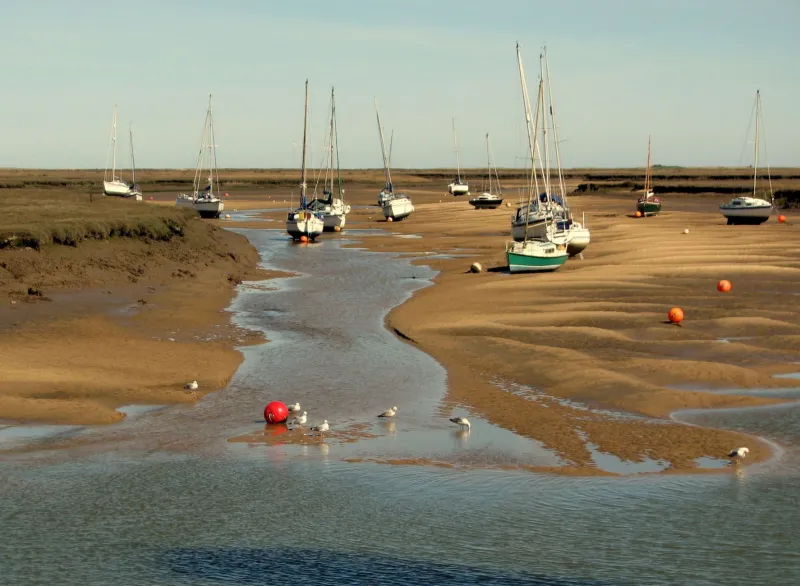
There is a particular sort of quiet that settles over a classic cockpit when the plotter goes dark. The glass still shows, the tide still runs, and the shore suddenly has to explain itself again. That is not a argument against electronics; a decent echo sounder and a charged handheld are sensible crew. But there is a deep pleasure in letting a church tower, a chimney stack or the colour of a mudbank do the navigating. These nine UK estuaries reward exactly that sort of looking.
The Deben: Transits, Towers and a Shifting Bar
Suffolk's Deben is a gentle teacher with a firm hand. The entrance at Felixstowe Ferry is guarded by a martello tower and a shingle bar that moves about enough to keep the pilot books honest. Once inside, the river is a procession of landmarks: Bawdsey Manor among the trees, the church tower at Ramsholt, the masts at Waldringfield. The trick is to arrive with the tide making and to use the leading marks rather than guesswork. A classic boat with a long keel likes the deeper water of the ebb channel, but the banks show themselves beautifully in low sun. Keep an eye astern as well as ahead; the transit that brings you in is often clearer from the cockpit than from the chart.
Alde and Ore: Shingle, Spire and Silence
Down the coast, the Alde and Ore feel like a secret kept behind a shingle wall. Orford's church tower is the great landmark, with the old lighthouse on Orford Ness a pale finger beyond. The entrance over the shingle bar at Aldeburgh is not a place for casual timing, and the swillies and mudbanks inside demand respect. Yet the pilotage is wonderfully legible: the spire, the ness, the line of the shore and the colour of the water. Springs push hard through the narrows, so plan to carry the last of the flood in and the first of the ebb out. In between, there is Havergate, the birds and a landscape that makes a plotter screen look decidedly small.
Blackwater: Mudbanks and Masts
Essex gets a bad press from those who have never sailed it. The Blackwater is a case in point: a wide, shallow, lovely expanse where the mudbanks have names and personalities. The tower at St Lawrence, the low green shape of Osea Island and the forest of masts at Tollesbury all help fix a position. Thirslet Spit and the various creeks demand a careful eye on the tide, but the rewards are anchorages that feel miles from anywhere. The local wisdom is simple: watch the water colour, trust the buoyage, and do not cut corners on a falling tide. A hand-bearing compass and a notebook are more use here than a screen full of waypoints.
Crouch: Church, Bungalow, Barge
Burnham-on-Crouch is the obvious centre, but the river's pilotage is a patchwork of smaller signs. Paglesham's church tower sits low over the fields, the bungalows at Fambridge mark the bend, and the barges and moorings give scale. The Branklet and the other banks shift enough to make a fresh look worthwhile each season. The Crouch is a river for a day sail with a flask and a sandwich, not a race against a red line. Time the entrance at high water slack if you can, and enjoy the way the shore comes at you in gentle layers rather than electronic jumps.
Chichester: Spires and Sand
Chichester Harbour is busy, but it still reads like a watercolour. Bosham's church spire is the key that unlocks the north-east corner, while Dell Quay and the Itchenor reach give their own bearings. East Head and the sand at the harbour entrance are excellent teachers of tide and swell. The harbour is a mass of marks, but the old skills remain: line up the spire with the trees, watch the depth, and note how the ebb drains the channels. It is a place to practise pilotage in company, with plenty of escape routes and a café never far away.
Dart: Castles and Daymarks
The Dart is a river of drama. Dartmouth Castle and Kingswear Castle face each other across the entrance, and the Daymark above Froward Point is a wonderful thing to pick out on a clear day. Castle Ledge and the rocks near the mouth ask for attention, but the harbour itself is a sheltered world of ferries and wooded slopes. The tide runs hard in the narrows, so a classic boat is best taken in with the flood and out with the ebb. Once inside, the pilotage becomes a matter of church towers, wooded points and the sheer pleasure of a river that has been sailed for centuries.
Fal: Two Castles and a Black Rock
The Fal is a grandstand of landmarks. Pendennis and St Mawes castles bracket the entrance, Black Rock sits where it always has, and the spire at St Just in Roseland is a lovely sight up the water. The harbour is broad enough to forgive a little uncertainty, but the rocks and shallows are real. Watch the tide, use the transit marks, and let the castles do their ancient job. On a grey day the whole scene is silver and green; on a bright one it is almost too pretty to navigate. Either way, the shore is the chart.
Dyfi: The Bar and the Bell
The Dyfi is a different flavour: wide, sandy and Welsh. Aberdyfi's white terraces and the dunes at Ynyslas are the great markers, with the bar outside demanding a careful eye on swell and tide. The channel shifts, so local knowledge and a fresh look matter. Inside, the river is a place of birdsong and big skies, with mudbanks that show their bones at low water. It is not a harbour for the careless, but it is a wonderful place to rediscover the habit of looking, timing and listening to the water.
Dee: Hilbre and the Point of Ayr
The Dee estuary is a masterclass in mudbank profiles. Hilbre Island sits offshore like a sentinel, the Point of Ayr lighthouse marks the Welsh side, and Flint Castle and Red Rocks give useful bearings. The tide races across the sands, so timing is everything. A classic boat with a sensible draft can enjoy the channels, but the wise skipper treats the estuary with respect and keeps the echo sounder as a friend rather than a crutch. The rewards are huge skies, quiet anchorages and the satisfaction of knowing exactly where you are because you looked.
Tide, Tea and Turning Off
None of this is an argument for pretending electronics do not exist. It is an argument for using them as a check rather than a substitute. Before you leave the mooring, note the tide, read the pilot, and pick out three landmarks you expect to see. In the cockpit, keep a hand-bearing compass and a notebook handy. At the entrance, slow down and look. If the plotter disagrees with the church tower, find out why before you commit. That habit is what makes a classic boat feel like a classic boat: not nostalgia for its own sake, but the quiet confidence of a crew who can still read the land. The estuaries are still there, still shifting, still generous to those who pay attention.