The Lesson of the Buoy: Why a Tidal Mooring Makes Better Sailors

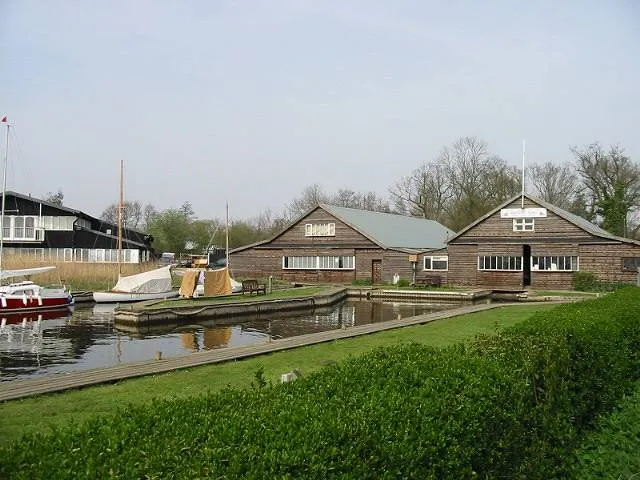
Photo: tidal swinging mooring sailing boat buoy UK harbour dawn, via get.wallhere.com
There is a certain kind of marina berth that makes a boat look like a car parked outside a house. Everything is close, level and convenient. You step aboard without wet feet, you plug in, you lock up, you leave. It is not wrong. But it is not the whole of seamanship, and it is not the whole of the classic-boating life either.
The swinging mooring, by contrast, makes you work for your day afloat. It asks you to read the tide, watch the wind, plan the dinghy ride and think about chafe before you think about lunch. It is cheaper, yes. But the real argument for it is not the saving. The real argument is that it teaches you things a pontoon quietly hides.
The tide is the timetable
A tidal mooring makes the tide visible in your diary. You do not simply decide to go sailing at ten o'clock. You decide when the water will let you, when the dinghy trip will be dry enough, and when the return will not turn into a muddy comedy. That is not an inconvenience. It is the oldest lesson in coastal boating, and it is one that marina life can soften to the point of disappearance.
At slack water, the harbour has a different atmosphere. Dinghies move with purpose. People stand on quaysides looking at the same stretch of water and making the same calculation. There is a shared rhythm to it, and a shared humility. The tide does not care that you have a busy week.
Fore-and-aft, or just a buoy
A swinging mooring can mean a single buoy with a pick-up line, or a fore-and-aft arrangement between piles or buoys. Both have their rituals. With a single buoy, the skill is in the approach: coming in slowly, judging the tide, getting a line aboard, and making fast without turning a simple pick-up into a public performance. With fore-and-aft, you add the business of keeping the boat aligned, setting lines with enough slack for the tide, and checking chafe where the ropes pass through fairleads.
The kit matters. A good boat hook, a mooring strop with a spliced eye, a secondary line, anti-chafe gear and a knife within reach are not luxuries. Neither is a dinghy you trust. The pontoon can make you forget these things. The buoy will remind you.
A dinghy is part of the boat
For many owners, the dinghy is the least glamorous part of the kit and the one that causes the most quiet frustration. It needs oars that work, a painter long enough to be useful, a bailer, and a little discipline about weight. The trip out to the mooring is not dead time. It is where you notice the wind direction, the state of the water and whether the boat is sitting as she should.
That short passage also keeps you honest about luggage. You learn to take what you need and leave the rest. You learn that a heavy bag and a small dinghy are a poor combination. You learn to wear the right jacket before you need it.
The community at slack water
Marinas have communities too, of course. But the swinging mooring gathers people in a different way. The dinghy dock is a meeting place. The harbour wall is a noticeboard. Someone will tell you that your pick-up buoy is sitting low, or that the wind is forecast to veer, or that the old boy in the next mooring has a spare shackle if you need one. It is not sentimental. It is practical, and that is why it lasts.
At slack water, the harbour becomes a small theatre of preparation and return. People help each other without making a fuss. A thrown line is a conversation. A lift ashore is a courtesy. The boat is the reason, but the harbour is the point.
What the pontoon cannot teach
A marina pontoon teaches convenience, and convenience has its place. But it can also make a boat feel like an appliance. The tidal mooring keeps the boat connected to the water's own schedule. It asks for patience when the wind is wrong, humility when the tide is low, and care when the season turns.
That is why the cheapest berth in the harbour is often the most valuable one. It does not just save money. It makes better sailors, one dinghy trip at a time.