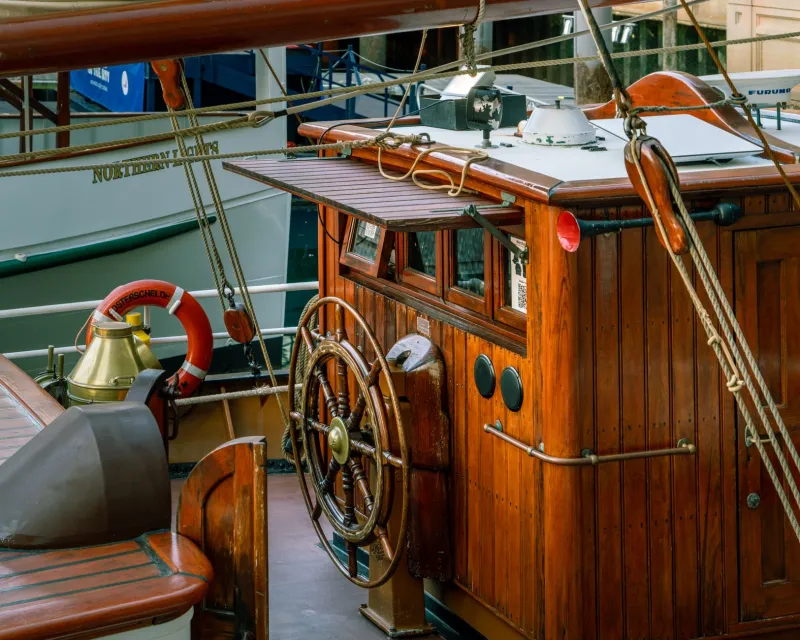
The Comfort of a Diesel Throb: Keeping an Old Engine in a Classic Hull

Photo by Photo by Georg Eiermann on Unsplash on Unsplash
The engine announces itself before the boat does. A low, deliberate throb rolls across the pontoon, followed by a puff of grey-blue smoke and the faint whiff of diesel and hot oil. To anyone else it is noise. To the owner of a classic hull, it is a pulse. You can tell a great deal about an old marine diesel from the way it starts, settles and sings. And in a heritage boat, that engine is rarely just a means of moving from A to B. It is part of the crew.
First, Learn the Language
Old diesels speak in sound, smoke and smell. A Bukh DV20 has a steady, slightly agricultural beat that feels almost Victorian. A Perkins 4.108 answers the starter with a rattle before settling into a dependable growl. A Yanmar 1GM is busier, sharper, like a small dog that refuses to admit it is old. A Lister or Sabb may idle with a rumble you can feel through the soles of your shoes. None of this is a fault. It is dialect.
Smoke is the next clue. A little blue haze at start-up is often oil finding its way past worn guides or rings, and it may clear as the engine warms. White smoke once running can mean unburnt fuel, a tired injector or water where it should not be. Black smoke under load suggests too much fuel and not enough air. None of these are reasons to panic, but they are reasons to listen. The same goes for leaks. A classic diesel that marks its territory with a drop or two of oil is not necessarily dying; it is telling you where to look.
Before the Season: A Gentle Checklist
Winter lays up an engine as surely as it lays up a hull. Before the 2026 season properly begins, spend a quiet hour or two in the engine bay with a torch, a rag and no particular rush. Check the oil and coolant when cold. Inspect the raw-water strainer and impeller; a tired impeller is a small part with a large talent for ruining a day. Look at fuel filters for sediment and water, and drain the water trap. Grease the stern gland if you have one, check the engine mounts for cracks or sagging, and make sure the exhaust hose is sound. Batteries deserve a proper charge and a look at their terminals. Belts should be tight enough to turn a pulley without squealing like a startled gull.
Then start the engine. Let it idle for a minute, watch the exhaust, listen for anything new. Bring it up to temperature under load rather than letting it tick over for half an hour. An old diesel likes to work. It does not like to be babied into a stupor. If something sounds different from last year, investigate before the first passage rather than during it.
The Parts Hunt
Ownership of an older engine often turns into a treasure hunt. Bukh parts can still be found through specialist dealers and owners' networks. Perkins spares are widely available, though pattern parts vary in quality. Yanmar has a strong support chain, but older models can require patience. Lister and Sabb owners tend to know each other by name. The internet has made this easier, but it has not made it easy. Forums, owners' clubs, boat jumbles and the dusty back shelves of chandleries still matter.
Buy a workshop manual if you can. A genuine one, ideally, though a good photocopy is better than guesswork. Learn the part numbers. Photograph the engine from several angles before you take anything apart. Keep a notebook of what you changed and when. And cultivate a relationship with a marine engineer who does not roll their eyes at the sight of a 1970s block. That relationship is worth more than any shiny accessory.
Rebuild or Repower?
The big question eventually arrives for every old diesel: rebuild or replace? A rebuild keeps the character, the weight and the mounting points. It preserves the sound that has become part of the boat's identity. It can also be expensive, and it may uncover more wear than expected. A repower brings reliability, cleaner exhaust, easier starting and modern parts availability. It can also change the balance of a classic hull, require new beds, a different shaft, perhaps a new propeller, and a lot of cheque-writing.
There is no universal answer. A tired Yanmar in a small daysailer might be better replaced with a modern Beta or Yanmar. A beloved Bukh in a wooden cruiser may deserve a rebuild. The important thing is not to let fashion decide. A heritage hull does not automatically need a heritage engine, but it does deserve an honest conversation about what the boat is for, how far you sail, and whether you enjoy the ritual of ownership or simply want to turn a key. Mechanical sympathy is not nostalgia for its own sake. It is a practical recognition that old engines ask to be understood rather than ignored.
The Sound of a Boat Being Used
There is a particular pleasure in hearing an old diesel settle into its work as you leave the pontoon. The note changes. The exhaust softens. The hull begins to move. You can hear the water at the stern and the faint clatter of a valve or a tappet that has been there for years. It is not silent, and it is not meant to be. It is the sound of a boat being used, maintained and trusted.
So treat the old engine as a companion rather than an appliance. Warm it up. Change its oil. Listen to it. Give it clean fuel and a clean impeller. Forgive the occasional drip. And when it starts first time on a grey November morning, with the tide making and the kettle on, you will understand why so many of us keep faith with the engine you can hear coming long before you see the boat.